
The Architecture of Learning: How Kalamb’s Urdu Schools Built Success Without Books
The Real Resource Was Never the Workbook
In the Urdu-medium schools of the Kalamb block, a powerful lesson in resilience is currently unfolding. Typically, the success of a new educational initiative is measured by the distribution of materials, workbooks, kits, and manuals. However, a recent delay in receiving student workbooks created an accidental "stress test" for the initiative. It revealed that the true heart of the program isn’t the paper in the students' hands, but the new way of thinking in the teachers' minds.
The Internal Shift
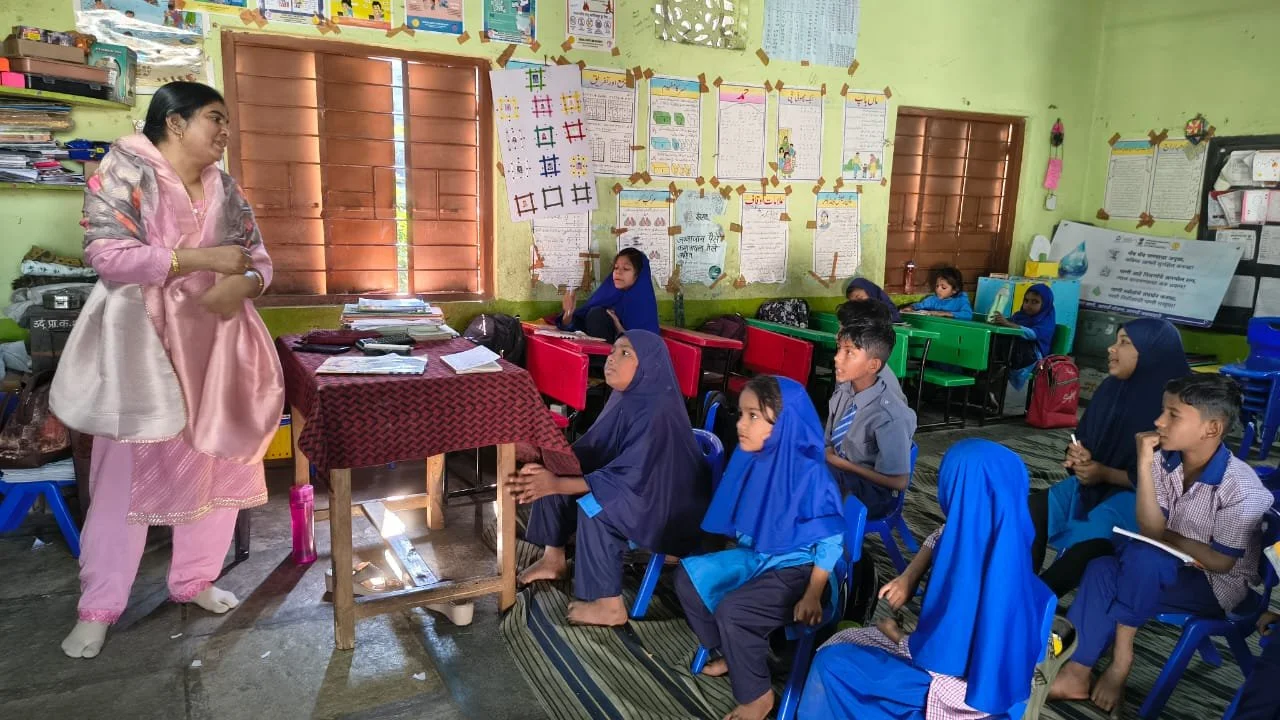
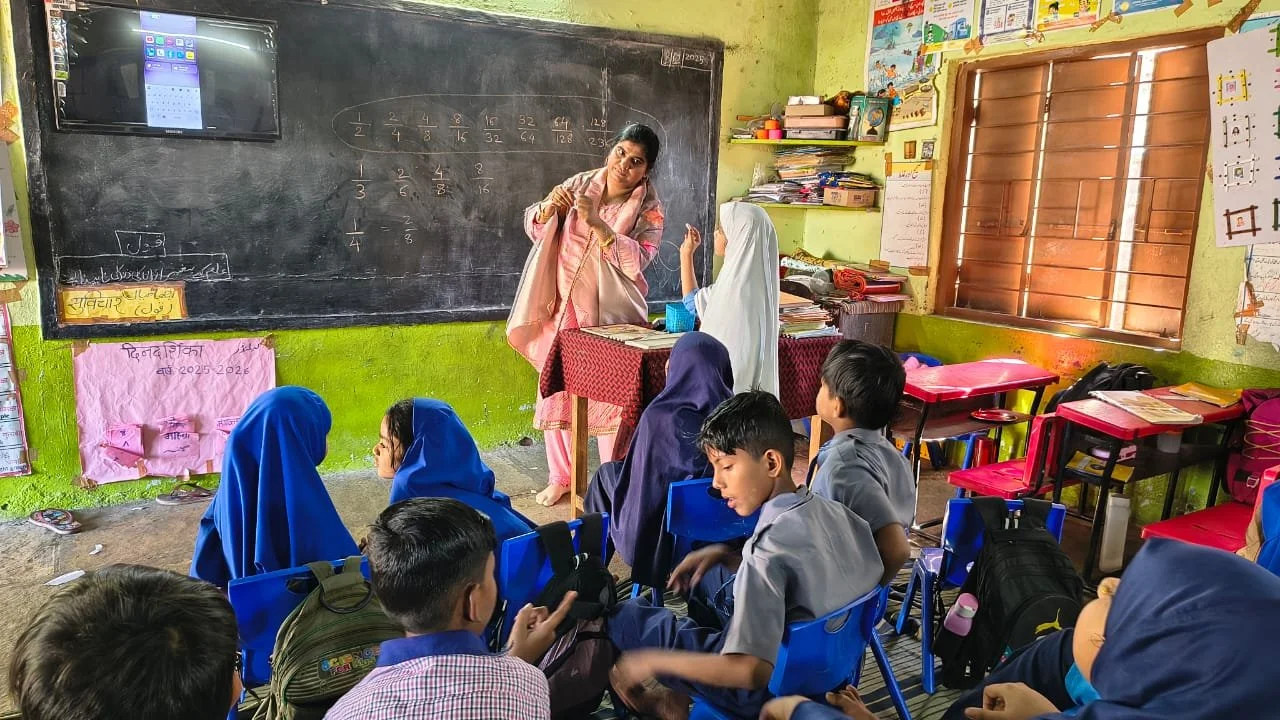
For many of the 18 teachers participating across six schools, the initial hurdle was internal. Arjumand Shaheen, a teacher in Kalamb, admits that complex mathematical concepts like fractions were once a source of personal uncertainty. She wasn’t alone in her hesitation. But through the TIP framework, the focus shifted from "following a page" to "visualising a concept."
Working closely with Teacher Coach Priyanka Hore, Arjumand and her peers began to see mathematics as a series of mental models rather than a list of problems to solve. Priyanka had to immerse herself in the Urdu curriculum, translating pedagogical terminology to ensure the "why" of the math wasn't lost in translation. This deep-dive coaching allowed teachers to move past their own confusion, eventually leading their students to create physical fraction models that turned abstract numbers into a tangible, touchable reality.
Building Stories from the Ground Up
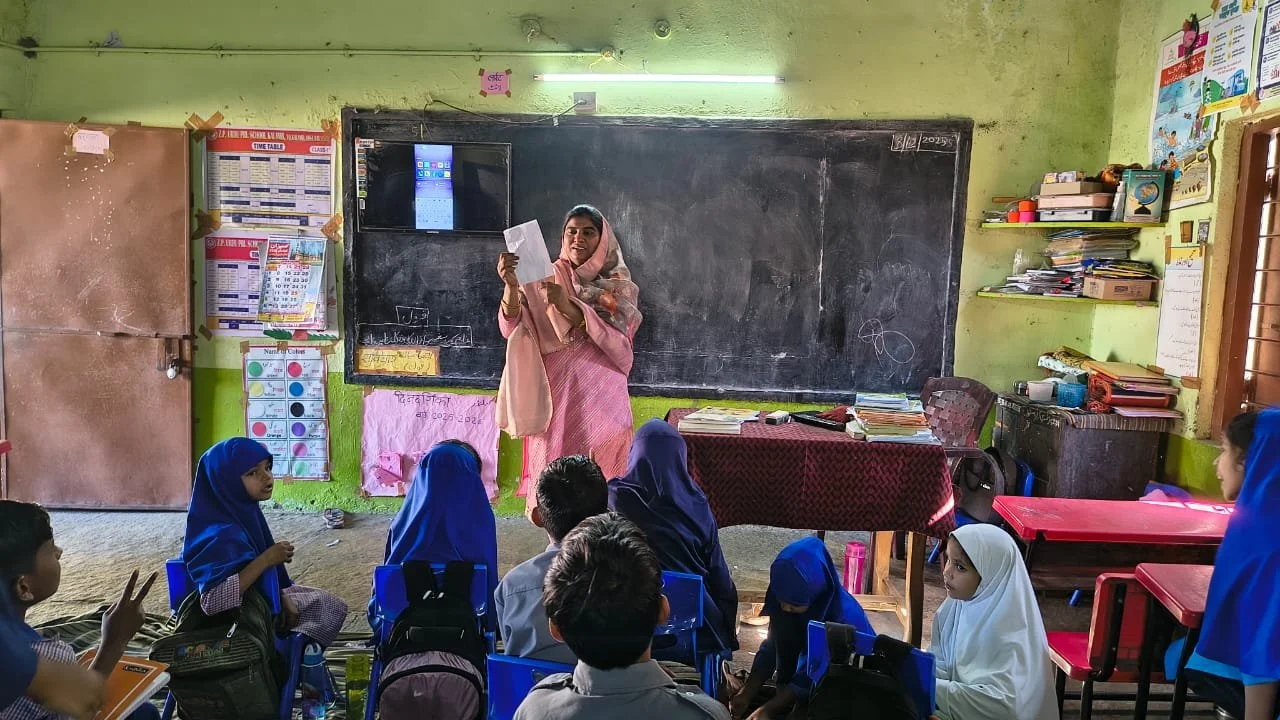
The transition in the language classrooms was equally profound. Without workbooks to guide daily practice, Shaheda Banu and her fellow teachers leaned into the structural "bones" of storytelling: setting, character, conflict, and resolution. Instead of passive reading, the classroom became a workshop. Students were taught to architect their own narratives in Urdu, slowly assembling their thoughts into individual, hand-made storybooks. By the time the Block Learning Exhibition arrived, these classrooms didn't just have students who had "completed a syllabus"; they had young authors and mathematicians who owned their knowledge.
The Confidence of the Community
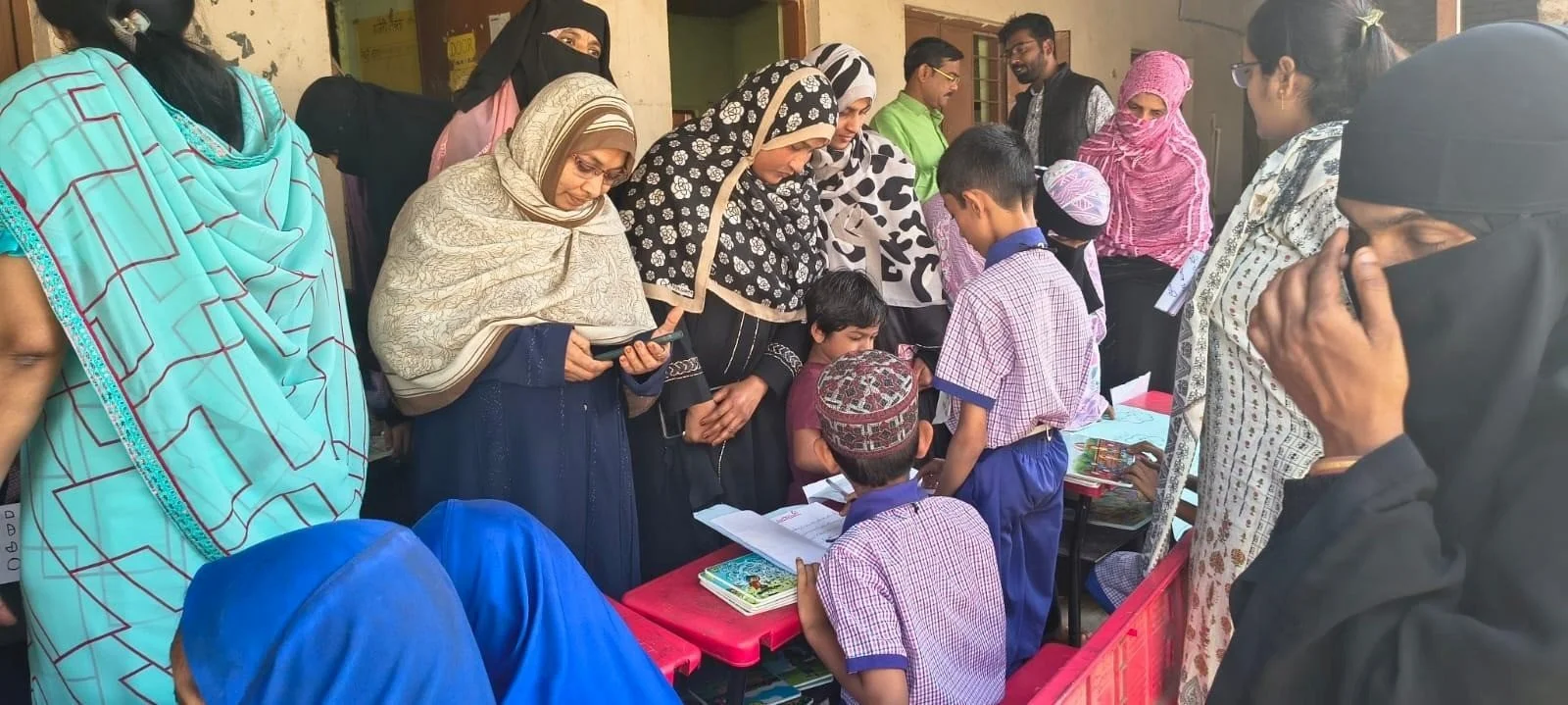
The impact of this "teacher-first" approach was most visible to those outside the school gates. Adil Qadir Sheikh, President of the School Management Committee (SMC), noted a striking change in the atmosphere of the recent student exhibition. Unlike previous years, where students might have recited memorised facts, he watched as Grade 3 and 4 students interacted with visitors with unprecedented confidence.
They weren't just showing their work; they were explaining the logic behind their fraction models and the creative choices in their storybooks. To the community, it was clear that the students weren't just learning—they were articulating their world in their own language.
A New Standard for Innovation
The experience in Kalamb proves that when teachers are supported with continuous, reflective coaching, they become the primary resource for their students. Despite the technical challenges and limited resources, the dedication of teachers like Arjumand and Shaheda, paired with Priyanka’s on-the-ground coaching, ensured that quality learning never paused.
The success of these Urdu-medium schools stands as evidence that when we invest in the person at the front of the classroom, the lack of a workbook becomes merely a footnote in a much larger story of student agency and achievement.