
A New Direction—When A Child Discovers Her Wings
The Story of a Girl Who Learned to Believe She Could Learn
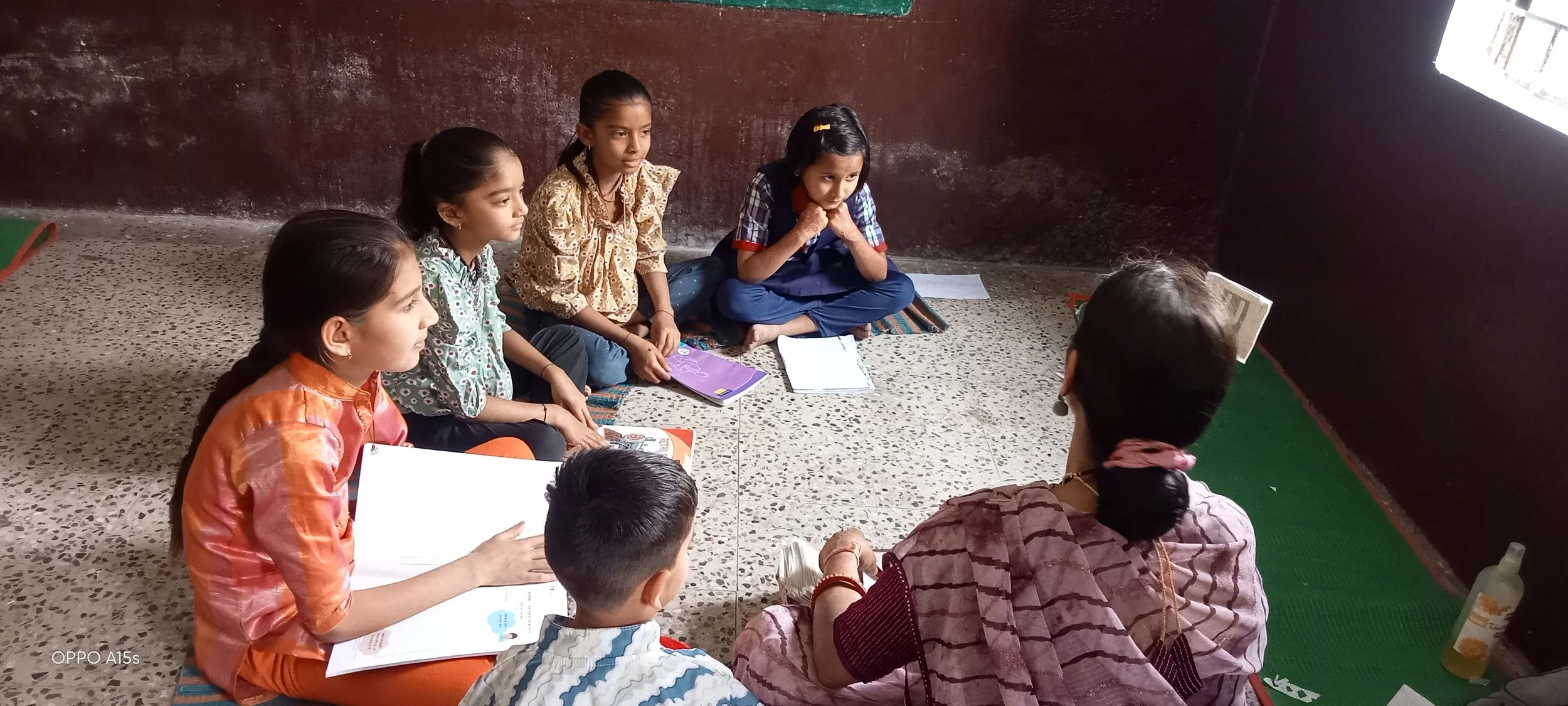
In Semliya Chau, a small village about 20 kilometres from Indore, sits a government primary school with 42 enrolled students. Among them is Pankhudi — a Class 5 girl whose father works as a farmer and daily-wage labourer, and whose mother cooks the midday meal at the very same school.
Pankhudi's relationship with school had always been complicated. She was enrolled in Class 1 but rarely attended regularly, often staying back to help at home and care for her younger brother. By Class 3, she had attended for only a handful of months. While she was perceptive and capable in many ways, she struggled with math — addition and subtraction felt impossible, and that struggle had quietly turned into a fear.
Teacher Rekha Raghuvanshi had seen this before. She knew her children — knew which ones were slipping away, and why. When she joined CEQUE's Teacher Innovator Program, receiving Hindi training in July 2024 and Mathematics training in 2025–26, she came with questions she had long been sitting with: how do you reach a child who has learned to be afraid of learning? How do you make a classroom worth coming back to?
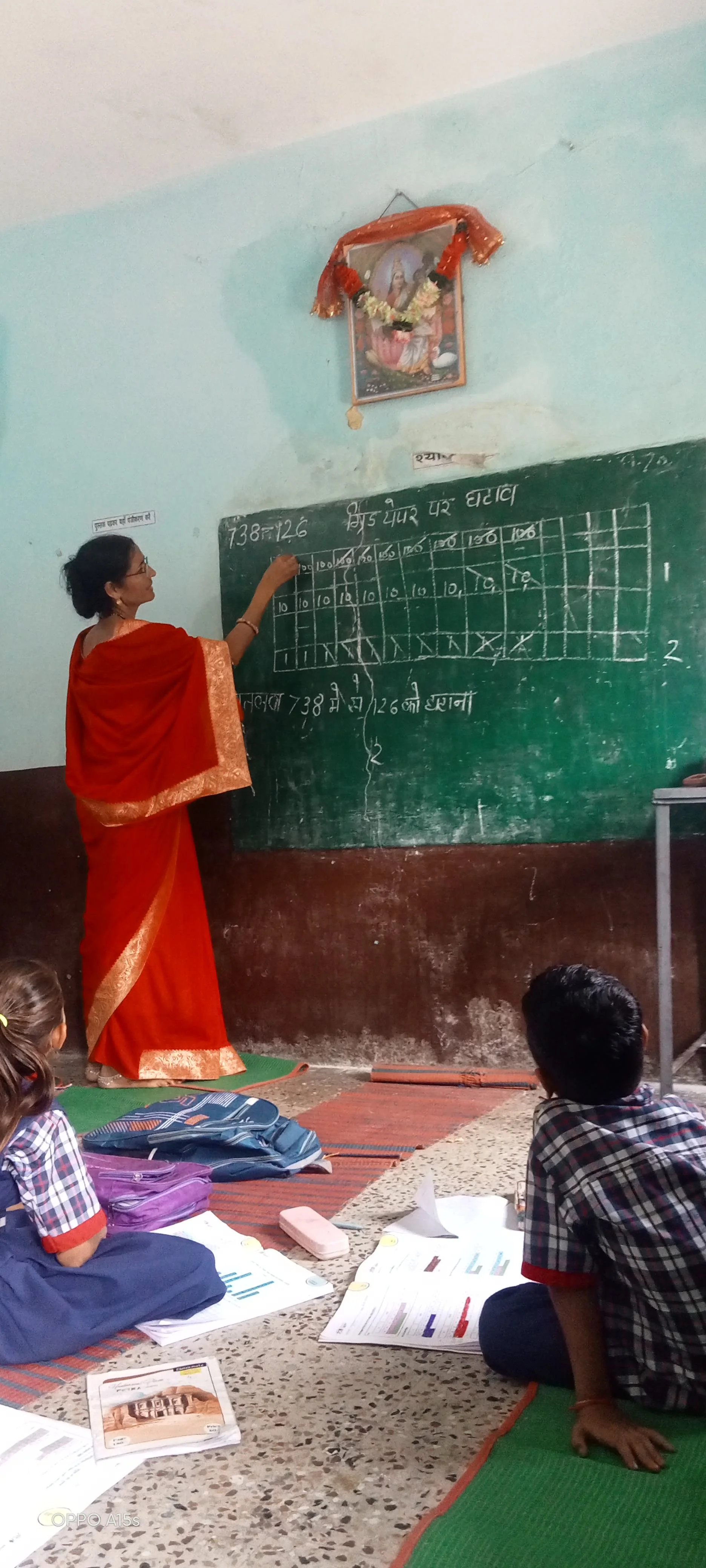
The early picture was sobering. Attendance stood at 50%. Children were drifting to the fields, and the learning environment — worsened by rain-damaged classrooms — offered little to hold them. Rekha recognised that something fundamental needed to change, not just in what she taught, but in how the classroom itself felt to a child walking in. She teamed up with CEQUE's coach, Ashok Mehandiya, who suggested the specific changes that could make the classroom a more active learning space.
They started with the room. Together with the students, the space was rebuilt, decorated, and made theirs. She brought in grid paper, colours, and familiar local references to teach two-digit addition, turning what had been an abstract, intimidating exercise into something tactile and playful. She introduced Bal Sabha. She began discussing lessons with children before teaching them, making space for their voices before expecting their answers.
The response was almost immediate. Attendance climbed to 80%. Pankhudi — who had always found reasons to stay away — began coming every day.
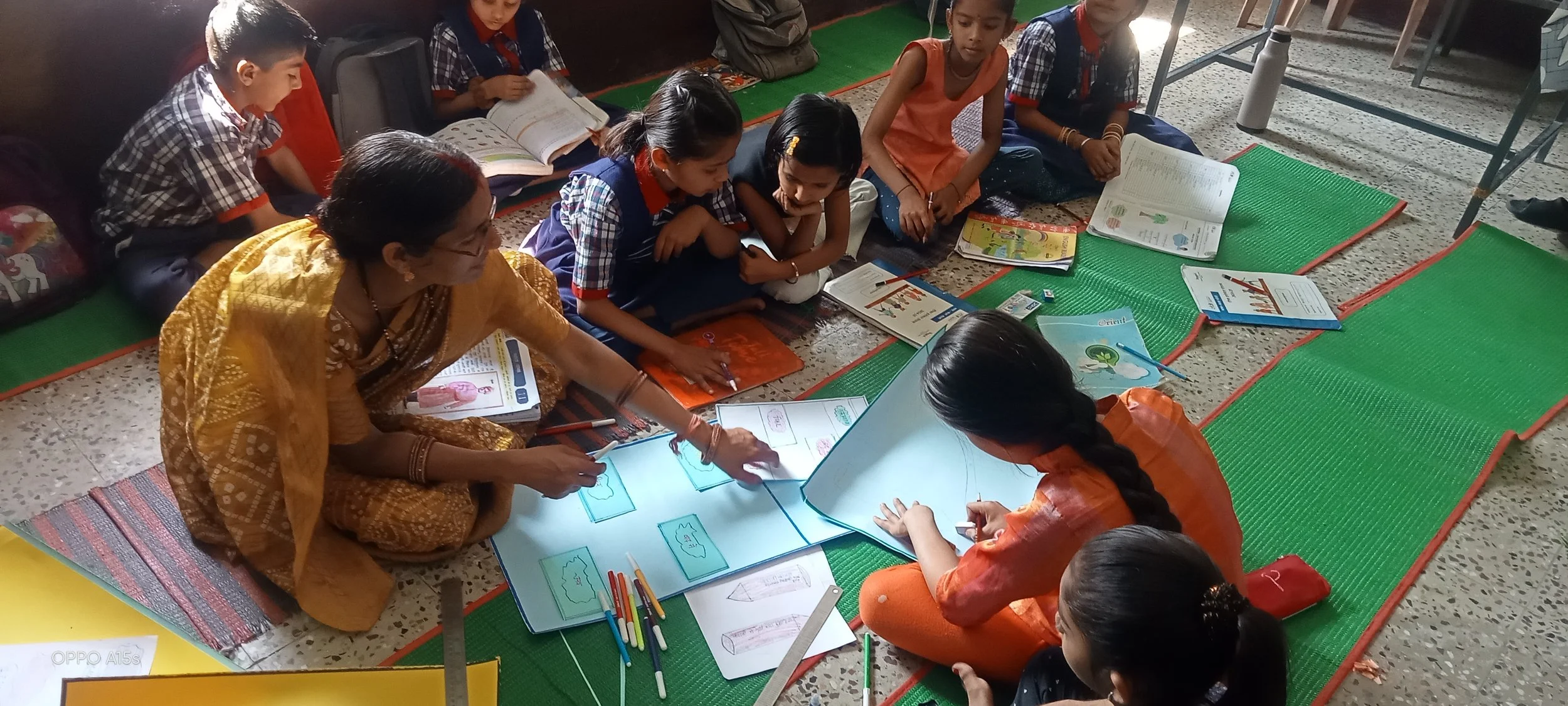
As children got more chances to speak, explore, and share, something shifted in Pankhudi, too. Within months, the girl who had once dreaded math began solving addition and subtraction on grid paper. Then she started helping her classmates do the same. Rekha introduced flashcards and sequencing strategies for students who needed extra support, tailoring her approach child by child.
After three to four months, Pankhudi could solve basic arithmetic with confidence. As teacher Rekha says it simply: "Not long ago, she couldn't even recognise numbers. Today, she solves problems on her own."
Pankhudi's story is not just about one child catching up. It is a testament to what becomes possible when a teacher refuses to accept that some children are simply beyond reach.